

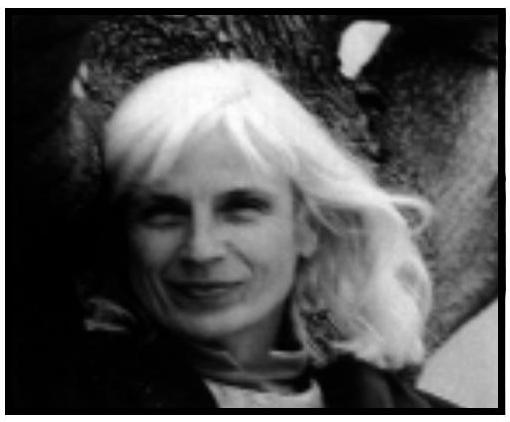
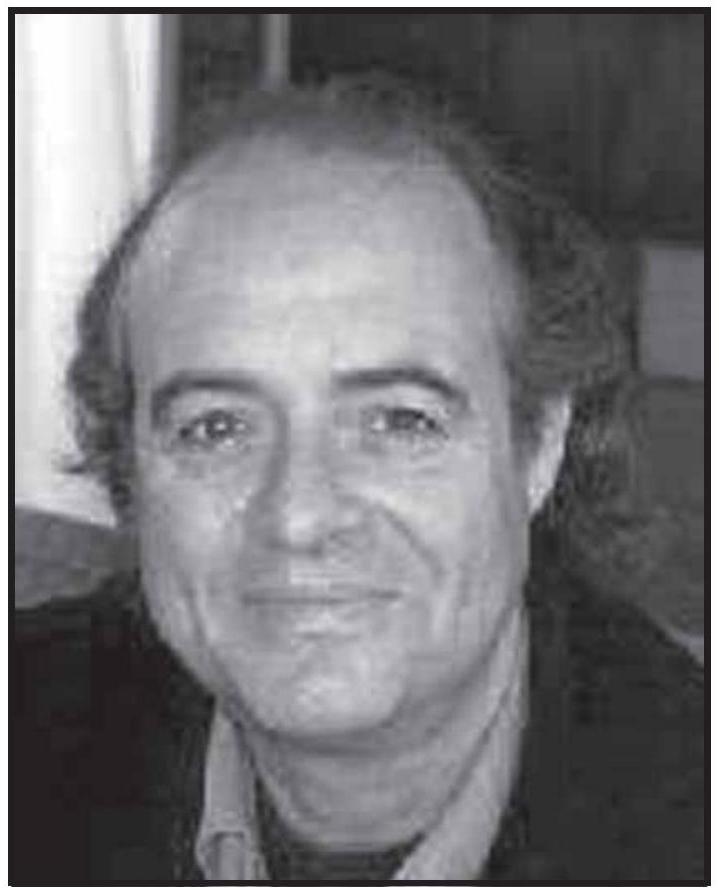
Robbie Bosnak is a Jungian analyst specializing in embodied dreamwork and the application of dreamwork to physical healing. Robbie and I met in his Cambridge, MA office in late November and again in December to discuss his work and especially his views on the September 11 crisis.
DNJ: You describe your approach to dreams as "embodied dreamwork." What is this and how is that different from analytical or interpretive dreamwork?
RB: Well, it's all about moving dreams into the body and getting to the body of dreaming. Embodied dreamwork (starts) from the point of view that experiences and emotions are first experienced as bodily sensations. In the brain, fundamental emotions are basically psychophysical. So in this work, what we're trying to do is to enter into the dream image as an environment and, by doing so, get into the psycho-physical impulses that are directly related to these images. The value for the dreamer is that when you get in touch with the impulses that are at the heart of dreaming, then you get in touch with very deeply buried emotions and sensations that you'd otherwise never get to. By inhabiting these impulses, you get new kinds of awarenesses that are very far removed from consciousness; you can let them slowly enter into consciousness. The other thing is that it brings about the transformation of both psyche and body; that's why we're using somatic dreamwork also for people with physical illness.
DNJ: As the individual works with the dream in this way, revelation happens, insight happens?
RB: Yes, (but) insight is not the primary thing, it is a side-effect. I agree with Ernest Hartmann that dreams are by themselves therapeutic processes. By going into the dream, you enhance the therapeutic process that is inherent in the dream. The primary thing is the work on the material (itself), making it so concentrated that it affects you deeply. I think the reason why embodied dreamwork actually works (to accomplish healing) is because, as now science is finding, there is a direct influence of the (imaginal) brain on the immune system. You get very strong immune responses which then help with alleviating the illness.
DNJ: You have said that a standing interest of yours always is Alchemy, which you've been studying for the past thirty years, and which you find "absolutely fascinating."
RB: Yes, I've been working now for the past four years on six sentences.
DNJ: Oh, my heavens! So, in a way, is this your spiritual practice?
RB: No, it's my curiosity and my way of moving outside of my familiar mind. It's a way of blowing my mind, and then, after it's all blown to smithereens, seeing what kind of dust settles.
DNJ: It's interesting to juxtapose blowing your mind to the blowing to smithereens of the World Trade Towers. Could you say something about the value for you of having your mind blown, of having your familiar structures just dissolved or destroyed?
RB: Well, it keeps you limber.
DNJ: It keeps you limber and open? Open-minded?
RB: It keeps you very constantly adaptable. Adaptation, I think, is one of the most important things in all life forms. I think that many of the disease experiences are maladaptations that come through an ossification of our psychological system because we don't blow it enough. And this may be true for nations or social systems as well. Of course, you can blow it open so often that nothing is left of a fundamental structure. So you do need a fundamental structure.
DNJ: There can be too much change?
RB: Yes, too much change is also ... maladaptive or traumatic. A key notion of complexity theory is where you have to be always on the border of chaos and order. If you're too much into order nothing happens, if you're too much into chaos nothing (new) happens; but in the complexity of new organizations and new phenomena, creativity happens at the border of order and chaos.
DNJ: Do you agree with those who say our world is forever changed from the extremity of September 11?
RB: Well, obviously, America can no longer take its safety for granted. It must become part of the world in its natural state of insecurity, a state fundamental to life and most people of the world. What is important for us as people involved with dreaming is that suddenly the population is waking up to the experience of collective nightmares. Nightmares are events that are now pretty common whereas before they were things that you didn't talk about. Now in the middle of December, the fear level is already much, much lower than it was three months ago. But, at least for a few months there was the experience basically that we were in the same nightmare together. We have been dealing with it by going to war and being very successful at that.
DNJ: How did the National Nightmare Hotline come about?
RB: Given we now know that nightmares have to do with the integration process of trauma. I was watching on September 11 the destruction of the Trade Center over and over again on TV. I was thinking that this is the way repetition nightmares work, constantly repeating the same event. The next day Jill Fisher, the Executive Director of the Hotline, and I decided that there would be a great increase in nightmares, and we should have a receptacle for dealing with this. The Hotline has a toll-free number: 866-DRMS-9111. A dreamwork specialist will go into the nightmare with you and help you re-experience it. You get a great deal of relief. At the moment (Dec 11) we get a few dozen calls per week and it's slowly building. We have now about fifty volunteers who are experienced with dreamwork and who come from all kinds of approaches and therapies. Basically the guideline is that the dreamwork is non-interpretive. We help people actually experience the nightmare situation again, breathe through it and into it, thereby making it much less frightening. People fear the dread that is in nightmares. If you get through that fear and just get to the dread itself, it frequently becomes less dreadful.
DNJ: Often people in sleep will awaken in terror from the nightmare which doesn't allow the completion of the process.
RB: Yes, correct. The most important thing that people have to realize is that nightmares are ordinary phenomena, that they are actually therapeutic in a time of trauma. As Ernest Hartmann's work has clearly demonstrated, nightmares serve the all-important function of connecting dissociated states with the central nervous system so that the trauma is integrated or "digested," so that the terror is metabolized. I think September 11 will forever change the way that people will look at dreams in the United States. There is an enormous possibility for dreamwork in this crisis. I also think television at this moment is one of the most important therapeutic processes going on. It keeps people immersed in the terror, but in that way they're constantly dealing with the dream of terror.
DNJ: Is there a difference between a trauma that is individual and a trauma that is part of a mass event? Are there different ways to work to resolve these?
RB: I don't know if you can make a complete separation between collective trauma and personal trauma, because what happens is that when you get into a period of collective trauma, all the personal trauma comes back out. The new trauma is woven into the familiar system of the previously traumatized psyche. Of course frequently the collective trauma is so much more dreadful because it is the end of a whole world, although an individual trauma can do that as well. But still there is a vast difference between childhood sexual abuse and concentration camps.
DNJ: Are there different ways that the trauma, such as September 11, shows up in their nightmares? Is it represented symbolically or explicitly, or both?
RB: Well, with a repetition nightmare the literal event is repeated over and over again. Then after a while the nightmare begins to change, e.g., there is no longer an airplane going into a tower, but a car blowing up.
DNJ: The shock is shrinking and coming more into a proportion they can handle.
RB: Yes, it becomes more bite-sized. But in the beginning the dream will feel as strongly traumatic, but it will take place in another environment. When Allen Siegel did research about the fire in San Francisco, he found that at first there would be fires, but then later there would also be floods and other catastrophes that were no longer fires. This re-imagining of the traumatic situation is part of the digestive process.
DNJ: One could say that the September 11 event was a rude awakening on a mass level to the reality of physical vulnerability, of impermanence, and of death. Do you see this shock as having pragmatic value? Might it help with a spiritual awakening or maturation? For example, a receptionist I know who is in her late twenties was having a very hard time two weeks after the attack, crying often, couldn't eat much. Turns out she had realized for the first time that she was going to die. Suddenly she was asking the big questions: Who am I? What is life about on earth? Is there anything after death? When people get threatened, whether it's in the healing work that you do with diseases, or in this kind of mass trauma, what do you see happening in their relationship to the body, to death, and to spirit?
RB: I think everything begins to matter more. As long as you believe that life is going to last forever nothing really matters. The shortness of life makes it precious. See, in alchemy there is this notion that all metals desire to become gold, and that the alchemist basically helps that desire along. We each have an innate desire to matter, an innate desire for value, but it has to be triggered because it's usually dormant. When it gets awakened then...
DNJ: In a sense, when your mind gets blown enough?
RB: Yes, suddenly you have to clarify what has the highest value because you might die tomorrow, a bomb may strike, you may fall ill. I think that's a very useful experience for anyone to have. It basically differentiates the immature person from the mature person in facing the fact that death is always imminent.
DNJ: At the time it felt to me that this attack came from a very deep unconscious place (in our national Shadow), intruding into the false sense of security that the World Towers represented, the world of money, of financial power.
RB: I don't think it was a false sense of security at all. Up until that moment it was our sense of security. Why was it false?
DNJ: False in the sense that the financial world has been insulated to great extent from the awareness of death, of the impermanence of everything, of intense poverty inside or outside our nation.
RB: It was very interesting to me that the people in the higher floors of the World Trade Center were called "Masters of the Universe"-by themselves and by everybody else.
DNJ: That's a huge illusion they had.
RB: Yes, (but) it was an illusion that up until 1999 was very tangible. They were actually running the world. They were moving the money around. The effects of the fluctuation of currency are extraordinary-the way money can move within a fraction of a second from New York to Singapore and then to Tokyo, and in all those transactions something happens to world poverty, to everything. That's why they called themselves Masters of the Universe, not for nothing. So what has happened is that the attack on the World Trade Center was an attack on the Masters of the Universe and the stream of money.
DNJ: Joseph Campbell said you can tell what a culture worships by looking for the highest buildings. I was struck by the image of the two huge towers. They reminded me of the line about Julius Caesar, "He doth bestride the narrow world like a Colossus." These twin towers were like the legs of a giant, a (financial and military) Superpower. This attack represented a tremendous, crushing humbling of that illusion of invulnerability. The use of low-tech weapons to circumvent high-tech power evokes a David bringing down a Goliath-a way that some in the world might see Bin Laden's action. What myths or archetypes do you see as being acted out in this very public way around our national identity?
RB: I think what Osama bin Laden was trying to do was to resurrect the Crusades, to go back to the third crusade around 1200 when the Muslims recaptured Jerusalem from the Christians. He was beginning to take on the mantle of Saladin, the great Muslim general who destroyed Richard the Lion-Heart. I think what he really wants is to get Mecca, Medina, and Jerusalem, to reclaim Holy Cities for the Muslim faith. This is all part of the Apocalyptic theme that has been playing out for the last twenty or thirty years regarding the year 2000 and the Holy Cities. The City on the Hill is the final image in the archetypal pattern of Apocalypse: at the End of Time there is a battle between Good and Evil, a Holy War, which ushers in the Heavenly City of eternal peace. I think New York was setting itself up as the Heavenly Jerusalem.
DNJ: In what way, Robbie?
RB: That it was the City on the Hill. Given that America carries the archetypal set-up as the New World, the new paradise. I mean, if you go anywhere, people think about New York as the center of America. So I think they tried to destroy the Holy City of America in order to get the Holy Cities in the Middle East. The attack is very much about the destruction of the greatest temple in the city, the World Trade Center. You have to see that Bin Laden's whole family was involved in the Holy Cities (literally)his father (a construction magnate) rebuilt Mecca and Medina. So he was, from early on, completely involved in this notion of the Holy Cities.
I want to return to the idea that Bin Laden is representing shadow side that we have to somehow integrate into our system. We have set up in psychology frequently this notion that we are doing everything by projection and we have to integrate the projection. What's happening here I don't think is anything about that. What is happening is that there are two fundamental ideas that are battling, a battle of secularism against fundamentalism. And I am completely and totally fundamentalist about secularism, about the division of church and state. I believe in it as holy and sacred just as Osama bin Laden believes in fundamental Islamic law and that the United States is the devil. I am not willing to integrate any of that shadow. It's an archetypal battle of ideas.
DNJ: OK, but still I'm thinking about shadow in other respects. For example, when it became fairly clear that this attack on the Towers and the Pentagon came from the Mid-East, I was aware that the US had attacked Iraq and killed upwards of 100,000 civilians, not to mention the 125-150,000 military people, nor the thousands who have died there since then.
RB: Right.
DNJ: So there was a very real physical event that had to do with the USA's destruction of Iraq, our need for oil, for destabilizing oil-producing nations in the Mid-East, and all of that. I learned that bin Laden had been directing his antagonism towards Russia until after the attack on Iraq, after which the rage began to go toward the United States. We had never as a government ever acknowledged, or even recognized or apologized for what we did do to all those people in Iraq. The Arabs have been in our nation's shadow, probably one of the least known of the ethnic groups in our country. So that's the way in which I meant that we need to integrate our shadow-to own and take responsibility for the tremendous suffering that we have inflicted on others. We now are beginning to experience for ourselves what it's like for people in the Mid-East and Bosnia and elsewhere, to walk around terrified by war or terrorism, whether it's a holy war between two powers each believing, quite righteously, in their purity.
RB: Well, as I said, I think that it is fundamentally a holy war, as you say, because it is a war of ideas, and it is fueled by the murdering of civilians by the Americans in Iraq. That's the fuel, but that's not the war. If there were not a sense that the extreme of Islam has to rule states, then I think there would not have been this attack.
There are two things going on. On the one hand, it is important to acknowledge your misdeeds, and there have been tremendous misdeeds by the United States, I agree with that completely. You have to feel and imagine what you have inflicted, because that lack of empathic imagination causes tremendous damage. That's one thing. The other thing is that you have to know that you are just as passionate about secularism as the people that attack us are about their fundamentalism. So that, yes, you can integrate that shadow, but you also have to passionately stand for what you stand for.
DNJ: And why is that so important?
RB: Because I would not want to live in a country that is run by a religion. I will defend myself to the end to not have to live in a place that is run by a religion. If somebody in my country would arrange a government that tells my daughter to dress in a certain way and that says because I am Muslim I'm going to run all of your lives, or because I'm Jewish I'm going to run all of your lives, or because I'm Christian I'm going to run all of your lives according to my ideas, then I will attack. I'm just saying that I'm just as ferocious-ferocious is the word-in defense of my values as he is in defending his. I am a fundamentalist secularist. We have to defend (the pluralism at the foundation of) secularism, otherwise it becomes effete and thin.
DNJ: So, for you, the Warrior's way-of attacking or defending in protection of one's way of life-is essential. Almost all of the women I know express a deep horror about the US' use of violence to address the violence that took place here. I respect the vital role of the Warrior in protecting life, values, homeland. Yet it has looked to me as though the Warrior archetype itself is running our governmental priorities.
RB: No, I don't think that America is a warlike nation at all. I don't think that America likes war. America likes violence.
DNJ: And, please, what is the difference?
RB: War is not fundamentally about the destruction of civilians. War is warriors fighting warriors, taking equal risks. If you look at what's happening in Afghanistan, (or previously in Iraq) that's violence, that's not war. We're just bombing and bombing with such extreme violence, but there's no combat going on. War is much more disciplined. America has been set up in its Constitution to not be a warlike nation, so there is no warrior class here as there are in Europe and many other places. So I do agree with James Hillman that the United States will go to incredible lengths of violence to not have to do a war.
DNJ: Some women in my client practice and groups are asking, "Where are the women in this? Where is the effect of the women in mediating this kind of a conflict at all?" Do you feel that there is a way or place that the feminine can come in?
RB: I think that the most important thing that was done was that there was this young British woman who made this film about women in Afghanistan. It inspired everybody to see that Taliban were inhuman. These women who helped make this movie, who filmed this execution, were incredibly brave. So these women have had enormous influence on our response. I think this whole notion of splitting the men and the women in this is-why?-useless.
DNJ: I don't know that it necessarily has to be split, Robbie, but I do feel that...
RB: But the question, "Where were the women in this?" There were women involved in this.
DNJ: Well, speaking as a woman, when I look at the process of the forces that are mobilized, they are basically dominated by men, by the masculine imperative, and that's a fact.
RB: Yeah, sure, it was a masculine attack, that got a masculine response.
DNJ: Right. I think it's different for men and the masculine to have institutions existing. I think women are moving into those and the feminine exists in men as well as women, so I don't mean to polarize, but I think there is a reality.
RB: But I think it's a war of ideas going on, and this battle has nothing to do with gender-zero, zilch.
DNJ: But what about oil? Our interference in the MidEast, that's not a war of ideas, that's a survival tactic. That has to do with "we're gonna get what we need in order to survive."
RB: Right. But you know that there are as many women driving gas-guzzling SUVs as there are men driving them. So it has nothing to do with gender.
DNJ: I'm not saying the war has to do with gender, I'm just trying to find the place of the feminine to help mediate this kind of unmediated masculine response. Even diplomacy is built on the principle of some kind of exchange -- you know, you'd say, "What the hell caused this?"
RB: But what happens is - one of the most important things that has come out of this is that Syria is now a member of the Security Council. That's great! Bravo! But that doesn't mean that there are going to be more women involved. I think that the involvement of women in all these conflicts will be the same as the slow increase in the involvement of women in all levels of society. But the things at stake here have nothing to do with gender. The ideas have nothing to do with gender. The need for oil has nothing to do with gender.
DNJ: I just feel that there is something, yeah, it's a different relationship. Men and women respond differently.
RB: Yes, definitely, and I do think that if you would ask the women who lost their families in the World Trade Center bombing, then I think that they, that their reactions are just as violent and strong.
DNJ: That's a phase of the grief process, and the difficulty is when the response from (governmental) leadership is not mediated, when it comes from that primal grief, the rage phase, where you want to strike out and do retribution, then you end up with the kind of mayhem that we had in Ireland, that we have in the Mid-East, where there's this endless eye-for-an-eye-tooth-for-a-tooth battle that resolves nothing.
RB: I'm just still sitting with this men and women thing. I don't believe that women are less violent than men. I think that when people come into power, it is power itself that is violent.
DNJ: Unmediated power, I agree. Again, what I hear from so many of the women whom I know-maybe I'm in a mini-cultural stream-is this capacity to see both sides, to hold both. You know, it's like it's horrendous what happened to us and it's horrendous what happened to them, and how do we not do to them what happened to us? How do we try to change that?
RB: I hear that here all the time just as much with men as with women. It is an ability to hold ambivalence and ambiguity. And that is a human trait, that's a trait of maturity, and it's not a trait of the Feminine or Masculine.
DNJ: Right.
RB: But if there's one thing I want to get across today it's that there is a very ferocious and vital war of ideas going on, a war between uniformity and pluriformity, and that will be going on for a long, long time.
DNJ: Okay. Thank you, Robbie. Do you feel that this nation, broadly speaking, has a sense of the sacred, of reverence for life, or is it splintered in some way?
RB: I think there's a very strong sense of the sacred here - it's what Martin Luther King's spirit was all about: the notion that people of different colors and backgrounds all have to live together somehow. The experiment here in heterogeneity is a spiritual experiment. It may not be a spirit that everybody likes. As a European, the die-hard American spirit is not one I like, but I love the American spirit proclaiming itself as a people made of many peoples. This land has incredible spirit in this regard.
DNJ: It's an extraordinary mandate or calling that America has in the way it was formed-to be a place for all people. This is an...
RB: Extraordinary...
DNJ: ...spiritual opportunity.
RB: And it's very striking that with the election of 2000, where almost any other country of this size would have gotten into a civil war, there was a peaceful transfer of power. It has been going on here for well over 200 years... that's spirit. That's amazing spirit! I'm willing to stand up for that.
DNJ: Thank you so much, Robbie.
RB: You're welcome.
Ramsay Raymond, MA, MHC is a psychotherapist, artist, and educator in spiritual psychology, dreamwork, and creative process. She directs The Dreamwheel in Concord, MA. (978) 369-2634; Dreamwheel@compuserve.com.